
“I’m sure we all have our stories”
“I’m sure we all have our stories”
Adapted by Rachel Wagstaff, Birdsong is the stage version of Sebastian Faulks’s epic World War I novel of the same name, which follows Stephen Wraysford (played on stage by James Elder), whose life we see before, during and after the war. This version of the play, directed by Alastair Whatley, has been on tour across the UK, celebrating the 30th anniversary of the novel being published.
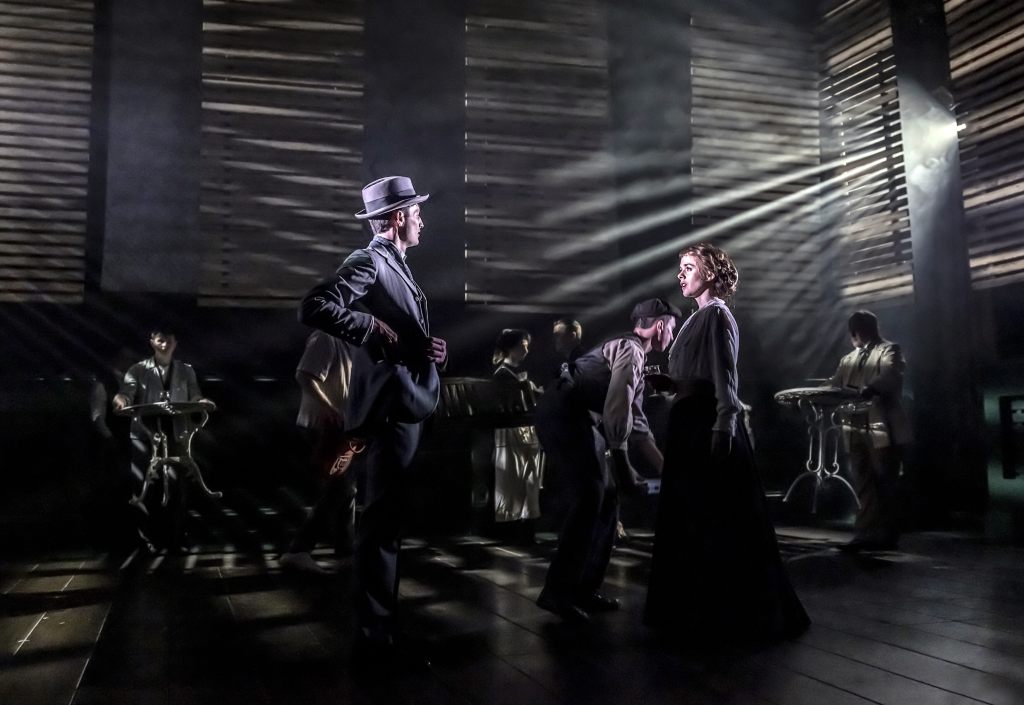
The first act of the show begins with Wraysford arriving in France and staying at the home of René Azaire (Sargon Yelda), the owner of a factory in the town. Wraysford is meant to be inspecting the conditions of the factory, something Azaire is not too pleased with. But soon Wraysford falls in love with Azaire’s wife, Isabelle (Charlie Russell), and the two begin to have a passionate affair that will change the course of their lives. Most of the first act is focused on their romance, particularly a scene involving the “Red Room,” where we get a beautiful moment from Russell as Isabelle finally gets to be herself in a home she has felt trapped in for years.
But, suddenly, after the first interval, we are in a warzone. It takes a few minutes to get adjusted to the new scene, as suddenly there is no Isabelle, no Azaires. Instead, we have the men of the army, including Jack Firebrace (Max Bowden), a man anxiously awaiting news of his sick son back home, Evans (Joseph Benjamin Baker), who works to comfort Jack, and Tipper (Raif Clarke), a young boy who lied about his age to join the war. Military Advisor Tony Green has done a fantastic job in bringing the scenes of war to life on the stage, especially when the men are in the tunnels underground, having to not only find their way but also having to be ready to fight at a moment’s notice if their tunnels meet those of the enemy.
The set, designed by Richard Kent, is simple yet effective, though it loses the intimacy it may have had on a smaller stage in such a large venue as the Alexandra Palace Theatre. A wooden set piece is lowered from the ceiling to represent the tunnels the men dig through during the war, but the rest of the stage remains wide open, making it look a bit silly when the actors are crawling around on the floor with nothing above them. The set for the Battle of the Somme is a highlight, one that remains in my mind even now.
One of the most frustrating aspects of the play is having the actors playing French characters keep their British accents, which took away from some of the impact of the concept of clashing cultures, especially when Wraysford is in France to inspect the factory. Even though it may be difficult for some to understand, it could have helped the audience understand the cultural divides a bit more, which is illustrated towards the end of the play when Wraysford has an interaction with a German soldier.
Another issue with the show is that, even with its three-hour runtime and two intervals, it becomes difficult to follow the plot as it jumps around the seventy years from before the war to modern day. Having one or two scenes with Wraysford’s grandchild is a nice touch, but these scenes feel out of place, lasting only a few minutes before jumping back into the action of the 20th century. It may have been a better choice to split the work into two parts, like The Forsyte Saga and Angels in America, so there would be more time to develop the characters and establish the three main sections of the work.
Ultimately, Birdsong is a powerful reflection on the effects of war and love, but it struggles to pack everything into one play, even with a three-hour runtime. The ensemble give a fantastic performance, but it is difficult to connect with characters we know very little about, even with the amount of time we have spent with them.
Birdsong runs until 8 March at Alexandra Palace Theatre. For more information at to purchase tickets, click here.
 Little Lark of London
Leave a comment