
“My show is about using joy as an act of resistance because it’s something that can never be taken away”
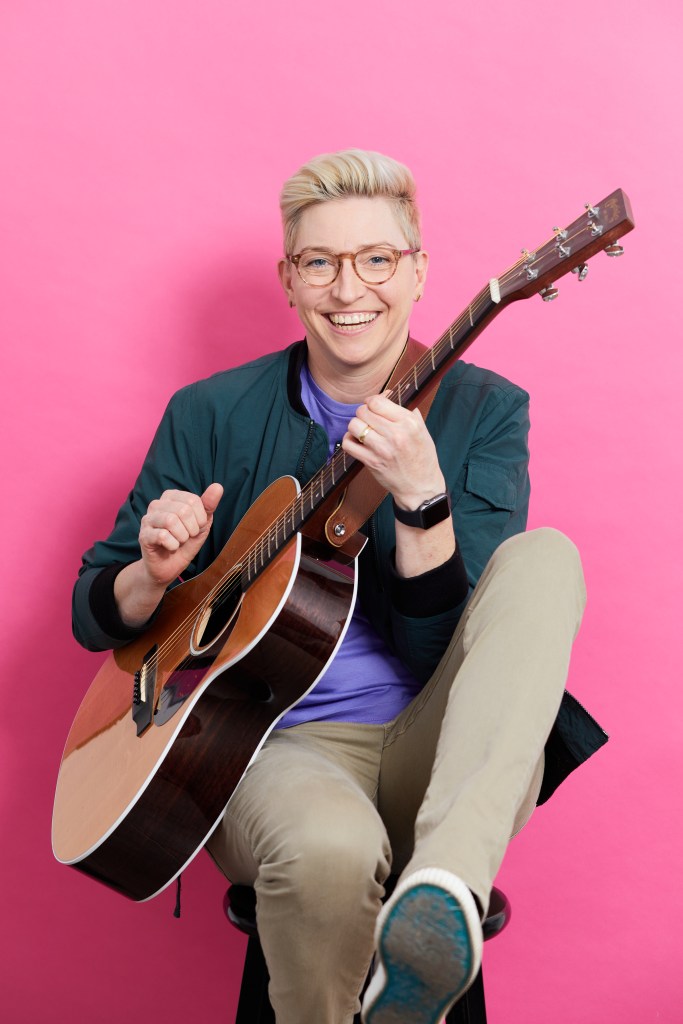
Kristin Key, an American comedian who has gained a large following through social media, will be bringing her Lesbian Army Tour to London this April. With a career in comedy spanning over twenty decades, Key has recorded multiple comedy albums and hosts a podcast, Kristin Knows Blank. Recently, we had the chance to chat with Key about her upcoming show at Leicester Square Theatre. We discussed how she first got started in the world of comedy, her creative process for a show like Lesbian Army Tour and what it has been like to be connected to the queer community through her work.
So starting with a bit of a general question, how did you first get started in the world of comedy?
Oh, wow! I was nineteen years old, going to college to be a paramedic. I was very depressed, and so, like most comedians, it started from a place of pain and trauma and tragedy. I was really fascinated by performances and performers. There was a local band that I loved from my hometown that had achieved some success. The lead singer, her name was Susan Gibson. She wrote the song “Wide Open Spaces” and sold it to – at the time – The Dixie Chicks, now The Chicks and she was my hero. I was like, “How do you get out of Amarillo, Texas, and become something?” I thought I was kind of funny, so I did an open mic night out of, “Well, I’ll try it, and if I’m not good at it, then I’ll just go back to college and live out the rest of my life knowing that this is all there is.” And then I found it was it was magical and wonderful.I dropped out of college within a few months and I’ve pursued it full-time ever since because I got to touch something that was just electric. I was like, “Well, now I can’t go back!”
And what has it been like developing your career since that first stand-up performance?
So it’s been 25 years – I’ve lived a whole person’s lifetime in comedy! And it’s like a lifetime. There’s been ups and downs and dreams and failures, and “I’m going to give up and I’m going to go get a real job,” and then some of the brightest moments of my life have been from my career success – growing a fan base, getting to develop a community, finding a way to use my comedy to raise awareness for queer visibility, to raise money for LGBTQ youth. To find a way to use this craft that saved me from being depressed and helped me survive to where now I feel like I can help other young people that might feel other to feel seen and okay and even feel joy.
So what made you want to create your current show, Lesbian Army Tour, that you’ll be bringing to London?
Oh, my goodness, this was so exciting! I had been doing straight people shows on cruise ships for years, and it did not occur to me that you could get to have your audience. Again, it came from a place of pain. I was on one cruise ship where I didn’t like the cabin, so my friend goes, “What if this is the universe telling you you’re not supposed to be there?” And I was like, “That’s a thing, too?” So I cancelled some dates that were guaranteed money, and I was like, “I don’t have any income coming in, but I’m going to try to put together a little tour called the Lesbian Army Tour.” I had put out some ads on a video a while ago to try to get some more lesbians to come to my show, and they did. I was like, “Oh, it’s like a little lesbian army out there!” And then they just kept saying, “I want to join!”And so the next thing you know, I actually had an army of lesbians that would come to my shows around the country. People in Australia were like, “Bring your show to Australia!” I’m like, “How am I ever going to do that?” And that happened! So my agents at the end of the year were like, “What do you want going forward?” I go, “I want the UK!” Let’s just keep going, but now let’s check off my bucket lists. So this is actually a bucket list of mine, to get to come.
What is the creative process like for a show like Lesbian Army Tour?
Usually I’ll take some ideas for a concept of what I want some jokes to feel like, and then I have to find a way to make them funny, because a lot of my material has to do with our community and what it’s like to grow up a gay little girl, come out of the closet and have a religious family. So they all start as ideas for a joke that are so dark that if I told them on stage, we’d all just be trauma-dumping. So I’ll have them on a page, and I’ll go, “Well, it’s not ready yet,” and flip through and do some lighthearted jokes. And then eventually I’ll come back and grab it because I’m in a silly mood, and suddenly I can see this joke not for the pain that was, but for, “What if we made it sillier?” I’m working on a joke about growing up in the 80s. And there’s so many things I want to talk about, like toys weren’t designed for girls and all this. But the other night on stage, I just said, “In the 80s, we didn’t even have women!” And it got a big laugh because it’s silly and stupid. And then I went, “The only lesbian we had was Patrick Swayze!” So I just scribble out some of the pain and make it silly, where we get the vibe of it, but we don’t have to commiserate in our pain. My show is about using joy as an act of resistance because it’s something that can never be taken away.
And what has it been like to see the queer community coming and supporting your shows?
It feels amazing to have young queer people and old queer people come up and just say, “Thank you for what you’re doing” – I’m assuming they mean getting us all into one room together. When I was a young gay kid, I felt like the only gay kid at my high school, like, “I may be the only gay kid in Texas!” In my brain. So going out, looking around the room and seeing haircuts just like mine, and seeing people that look amazing in T-shirts and they’re wearing their hats the way they like to wear them, it’s like, “Oh, we all look amazing in this room, so let’s carry that energy out in the world, because we are amazing outside this room, too.” Remembering that there’s a lot of us – we have a community. We’re not alone, and we have great haircuts!
You have quite a social media following. What is it like creating comedy for videos online versus the stage?
I think they’re so similar. The difference might be that I know if it’s going to be just a clip for the internet, it’s going to be something that’s happening right now in the world that I may not hang onto forever, so I might be more inclined to quickly put it out. I have a joke about Target right now about how we’re boycotting Target as a community because they did us dirty, but we still miss them because we thought they were our girl for so long. It’s easier to let go of some internet videos, but I’m always trying to build towards, “What’s my next special going to look like?” I just put out a special last year that hasn’t come out yet, but I recorded it so all that material is locked and it was evergreen material. And now I’m growing a whole new set, so I’ve got some stuff that I’m like, “I know this bit will be on the next special” and some of, “This is happening right now, so it likely won’t be relevant then.” So it’s a little different, but to me, it’s just such an exciting time to do comedy. Yes, the world is literally on fire right now – what a garbage bag of a world! And yet, when you back us [the queer commuinty] into a corner, we get more sarcastic and we get way gayer, because most of us that are out of the closet realise you can’t make us not gay. Your shame can’t do it, your bullying can’t do it. So really, two fingers up, what are you gonna do? We’re gonna make you very uncomfortable now. You started it, but we’re just going to be even gayer now and we usually have really good senses of humour. So it’s gonna be real fun. Sad, but real fun for a while. [Laughs]
What advice do you have for those looking to go into comedy, particularly queer comedians?
Don’t! Listen to everyone! Don’t do it! [Laughs] But if you cannot live your life without it, then jump in with both feet. Don’t listen to anyone. Trust your instincts. Show up. Find the joy in it. Use it to work through pain. Just keep showing up. If you’re like, “Oh, I’m toying with it, but I’m also very good at accounting,” be an accountant, but if your soul depends on creating comedies and art, welcome to the community – we’re broken toys. Find other comics. We’re always happy to help each other, especially if you’re a queer comic – this is a great chance for you to shine. People will always try to diminish a bright light, so just remember to do whatever you have to do to keep your light glowing. You can do it – hang in there. But if you can be an accountant, God love it. We need accountants!
What do you hope audiences take away from Lesbian Army Tour?
I hope when people leave that they are literally crying and hurting from laughing, but then when they soak it all in, I hope they realise that no matter what’s going on in the world, they can still find happiness and silliness in whatever times we’re living through. And I hope they take from it that they weren’t nearly as alone as they might have thought, because that’s what I’ve gotten from it. I’ve seen a community that I didn’t know was this big, I didn’t know was this strong, and it’s so vibrant, so supportive, so inclusive. It blows me away when I see how many people are so quick to help the person around them. It’s just the connections that I’m seeing. I hope that people take that away too, because that’s what I’m getting it from. I really do feel a part of this community, more so than before.
And finally, how would you describe Lesbian Army Tour in one word?
One word? Laugh-out-loud-hilarious-non-stop-musical-entertainment (gay).
Kristin Key: Lesbian Army Tour runs on 12 April at the Leicester Square Theatre. For more information and to purchase tickets, click here.
 Little Lark of London
Leave a comment