

“I make ‘em laugh, but I have the last one”
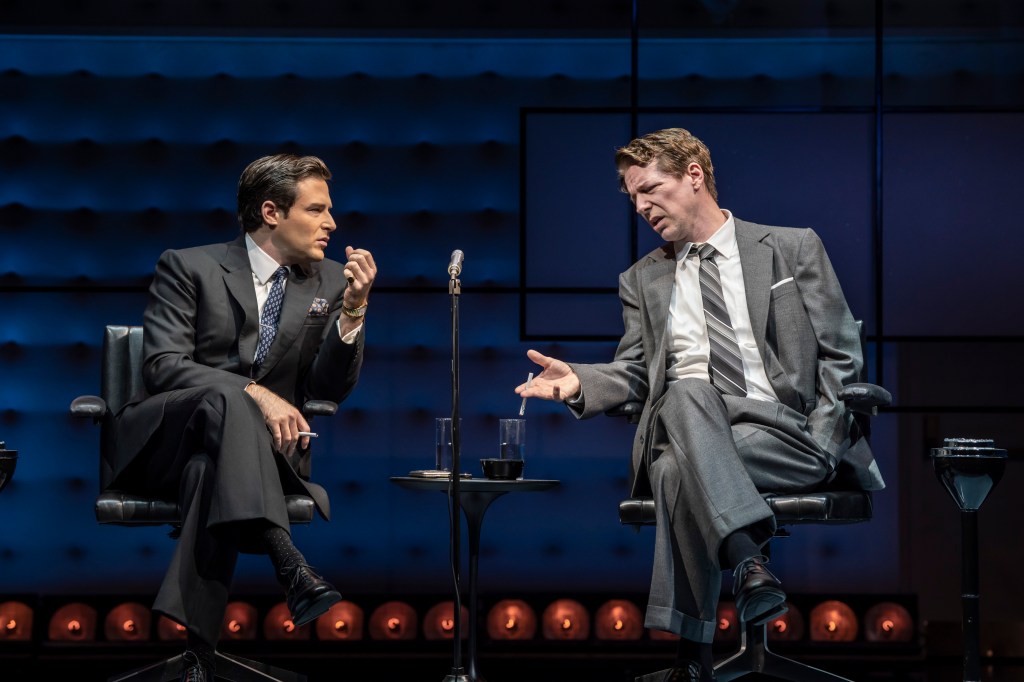
What would you do if you had four hours of freedom? Would your wife have you driven to a television studio so you can be the special guest on The Tonight Show with Jack Paar, which is having its first transmission from the West Coast? If so, you may have something in common with the main character of Good Night, Oscar. The play, written by Doug Wright and directed by Lisa Peterson, brings audiences into the world of Oscar Levant (Sean Hayes), whose wife, June (Rosalie Craig), has tricked the doctors in the mental hospital where Levant is committed and has had him brought to be the guest of honour on a television show hosted by his friend, Jack Paar (Ben Rappaport).
For those who are unfamiliar with the name, Oscar Levant (1906-1972) was a famous American pianist and composer known for not only his prowess at the piano but also his sense of humour, which made him a popular guest on talk shows and quiz shows. He also made several appearances in movies, including An American in Paris alongside Gene Kelly and Leslie Caron. Many refer to him as “Hollywood’s first celebrity meltdown,” as Levant was open about his struggles with mental health, forcing audiences to face the uncomfortable truth of dealing with such things. His main legacy, however, is having kept the music of his mentor, George Gershwin, alive for so many years after Gershwin’s untimely death at the age of 38, a legacy Levant cleary struggles with.
Paar is thrilled to have Levant join him on stage, as the two have a habit of discussing taboo topics that leave them laughing and have studio audience members in complete shock. The President of NBC, Bob Sarnoff (Richard Katz), is wary (probably rightly so) of allowing Levant to appear live for The Tonight Show’s first West Coast broadcast, threatening Paar with having Xavier Cugat, the Spanish-born bandleader, replace him as the special guest of the evening. And Sarnoff doesn’t even know that Levant is on a four-hour pass from the mental hospital!
The beginning of the play allows the audience to learn more about the characters and the general atmosphere behind the scenes of The Tonight Show (only enhanced by a great set designed by Rachel Hauck), with Paar dealing with not only Sarnoff complaining about Levant being late, but also Max Weinbaum (Eric Sirakian), Sarnoff’s nephew, who is a huge cinephile and a bit overeager to interact with guests Levant and Jayne Mansfield. Paar is confident Levant will arrive, and indeed he does, with Hayes receiving applause simply for his entrance. After watching video clips of Levant, it is incredible to see how Hayes is able to bring him to life so accurately in his performance, with not only the voice but the subtle body movements.
But Levant isn’t alone – he is joined by June, played wonderfully by Craig as the exhausted wife who, somehow, still loves her husband, and Alvin Finney (Daniel Adeosun), Levant’s carer, who is one second away from calling his supervisor to let him know that they’ve been tricked, thinking that the husband and wife were going to a daughter’s graduation ceremony. To add to the chaos of the night, Levant begins having hallucinations of his old musical partner, George Gershwin (David Burnett), with the world around him turning blue and, appropriately, Gershwin’s “Rhapsody in Blue” playing somewhat ominously in the background. It’s clear that something isn’t right, but, as they say, the show must go on. There is another problem, however – Levant refuses to play the piano, something that Paar had thought was all but guaranteed, putting him in an even tougher spot.
Before the broadcast of The Tonight Show, there are plenty of conversations between the different characters, including a surprisingly heartfelt one between Levant and Weinbaum, with Weinbaum upset at being brushed off by Mansfield and Levant giving him some hard truths about life. Indeed, there is quite a bit of push and pull in terms of emotions, with many conversations between the Levants going from loving to fighting within seconds. There is also a fascinating dialogue between Levant and Finney, in which the two discuss music, which leads to Finney acknowledging that he’s listened to Levant’s work and also provides Wright the opportunity to bring up the idea of Gershwin stealing music from black culture without giving credit, a subject that, while not central to the play’s plot, is important to remember.
The highlight of the show is when Paar finally gets to have Levant on air with him. Even though the pair had rehearsed the “guise” of spontaneity in front of Sarnoff, promising no conversations on things like politics, religion or sex, these are the very topics they immediately jump into – one can only imagine Sarnoff screaming in frustration while watching the broadcast. Paar is a joyful instigator, knowing exactly what to say to get Levant talking, and Levant is more than happy to oblige, leading to jokes that get gasps from not only the studio audience but the audience in the Barbican Theatre itself! And then, Hayes gives the performance of a lifetime behind the keys, completely enrapturing this audience with Levant’s interpretation of Gershwin’s “Rhapsody in Blue.”
Ultimately, Good Night, Oscar is a beautiful yet sobering look at the life of Oscar Levant, perfectly portrayed by Sean Hayes. Hopefully, the play will inspire more people to learn about Levant’s life, allowing him to finally step out of Gershwin’s shadow in the 21st century.
Good Night, Oscar runs from 31 July to 21 September at the Barbican Theatre. For more information and to purchase tickets, click here.

 Little Lark of London
Leave a comment